Most individuals hear the word "bond" and think about a solitary system, a money repayment to secure release while an instance progresses. Actually, bail in the criminal courts and bond in immigration proceedings adhere to various rulebooks, solution to different firms, and bring different effects for a missed out on court day. I have sat with family members at cooking area tables trying to make sense of both, often on the identical day, after a dawn arrest by neighborhood cops caused criminal charges and an ICE detainer. The systems overlap in complicated methods. Understanding exactly how they deviate can conserve time, money, and heartbreak.
Two systems, two purposes
Criminal bond stems from state or government criminal law. Its goal is to ensure an accused returns to court and, in lots of jurisdictions, to protect public security. The Eighth Amendment bans extreme bail, and courts weigh standard factors such as the gravity of the crime, prior record, connections to the area, and any type of threat to sufferers. The proceeding is adversarial however familiar, with prosecutors and defense counsel arguing numbers or conditions.
Immigration bonds stay in the civil world. They are not punishment and they do not signify regret. The Division of Homeland Protection establishes a preliminary quantity through ICE, and an immigration judge can later on evaluate it. The law asks whether the individual is a flight threat or a risk. That appears comparable, but the lawful standards and the proof that matters vary. No jury, no sentence, and no Sixth Change right to counsel at federal government expense. Also the word "bond" is practically a misnomer in this context, though several family members use it conversationally.
Who sets the number, and just how it changes
On the criminal side, the amount can be predetermined by a timetable for usual offenses, however courts often tailor it. Numerous counties now make use of danger assessment tools. A violation shoplifting charge could lug a $500 timetable amount, but if the individual has a steady task and no record, a court can launch them on their own recognizance. Alternatively, a felony with a violence part can produce a five-figure or higher number. State laws differ considerably, and some states allow preventive detention without bond under specific findings.
In migration wardship, ICE issues Form I‑286 setting the initial bond, often in the variety of $5,000 to $15,000, though I have seen $1,500 for long‑time homeowners with tidy backgrounds and $25,000 or even more where the agency fears making off. The minimum by law for a distribution bond is $1,500. If the family members can not fulfill it, a migration court can hold a bond redetermination hearing. Evidence that assists includes proof of lengthy residence, close family members ties, stable real estate, steady employment, school enrollment of kids, and any type of medical treatment. Wrongdoer arrests make complex the photo yet do not immediately bar release unless the legislation mandates detention.
Mandatory apprehension and its traps
In criminal cases, judges usually preserve discernment, though particular offenses can trigger specific rejection of bond in some territories. In the immigration world, obligatory detention covers individuals with specified criminal convictions or particular arrival groups. A permit holder with an old drug circulation conviction may be locked in under Immigration and Citizenship Act section 236(c), unable to look for a bond in any way. I as soon as dealt with a family who gathered letters, pay stubs, and pictures, just to discover that none of it mattered due to an aggravated felony classification. That is not an inquiry of fairness, it is a legal command.
There are also edge situations. Some detainees held under obligatory apprehension still receive parole or launch if ICE defalcated the law or if the infraction does not match the government definition. That evaluation needs careful statutory mapping and certified documents of conviction. Wrongdoer defense lawyers occasionally bargain appeals that stay clear of these triggers, but once an individual has the conviction, an immigration court can not revise it.
Who takes your money and how it is posted
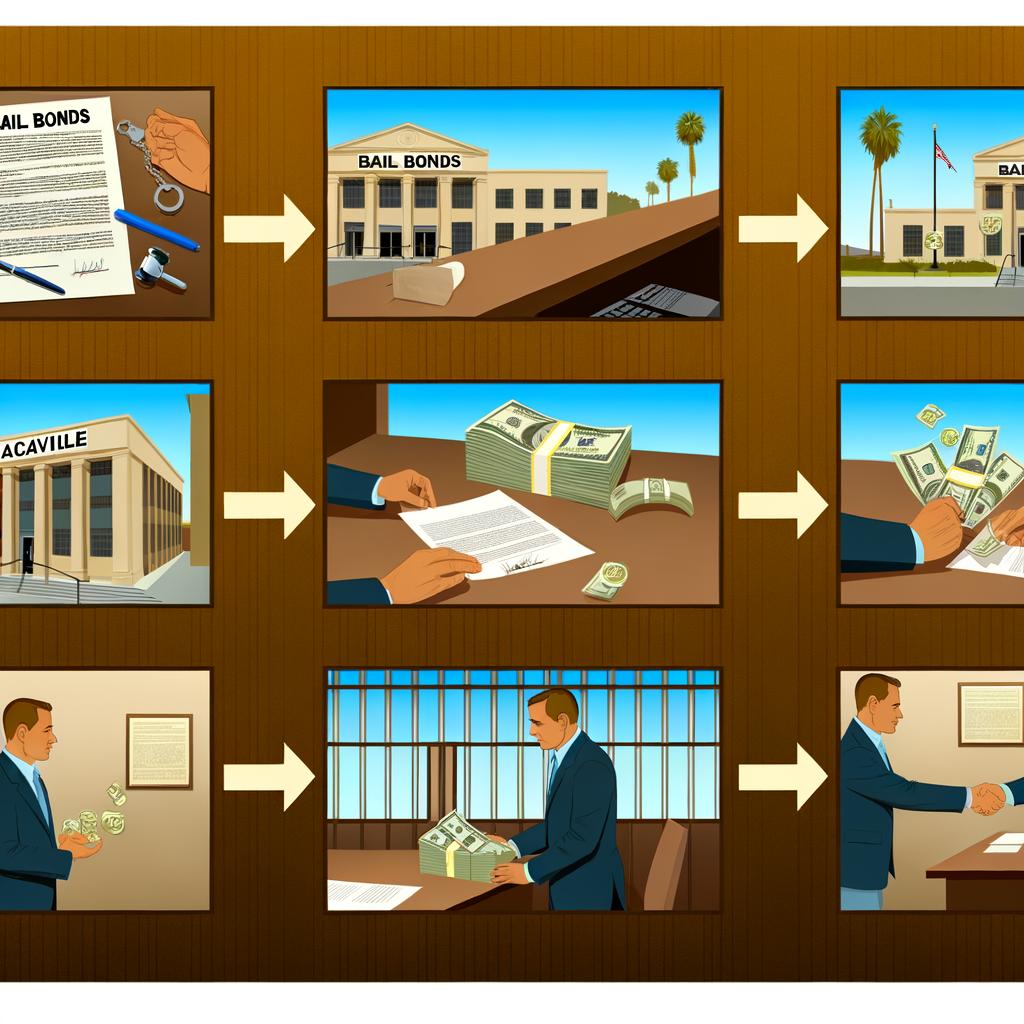
For criminal bond, the regular options include cash money bail paid to the court or a surety uploaded with a qualified bail bonds business. Pay money and you normally get the majority of it back at the end, minus court costs. Use an industrial bail bondsman and you pay a premium, generally 10 percent, that you never ever come back. The bail bondsman tackles the threat, and they might require security for higher quantities. Settlement happens at a court house, prison cashier, or an additional designated office, sometimes after hours with electronic systems.
Immigration bonds are paid to the Division of Homeland Safety And Security, not a court. Just a united state resident or legal irreversible homeowner can work as the obligor, the person that posts the bond. ICE's bonding window, generally at an Enforcement and Elimination Procedures field office, handles the documentation. The form is I‑352, with several bond kinds, one of the most usual being a distribution bond that protects the individual's appearance. Payment used to be limited to cashier's checks or money orders, yet ICE now approves electronic settlements through the eBonds system in a lot of cases. Still, workplaces keep lenders' hours. I have driven clients across community to make a 2:30 pm deadline due to the fact that the home window closed at 3:00. Miss it and you wait an additional day while your loved one sits in custody.
Some private companies market "migration bail bonds," which are surety items similar to criminal Bail Bonds. They front the money to ICE and bill a cost. The important distinction is the payee and the problems. The federal government holds the bond, and the household needs to keep up with check‑ins or run the risk of a breach.
What conditions attach to release
In criminal court, problems can include no‑contact orders, digital surveillance, time limits, travel limitations, material testing, or enrollment in pretrial services. The objective is to lower threat and guarantee looks. Go against a problem and the court can revoke bond and release a warrant.
For migration launch on a delivery bond, the main obligation is to show up when required. ICE might include monitored launch conditions, such as routine reporting, home brows through, or GPS monitoring via an Alternatives to Detention program. Some customers obtain a check‑in timetable every 30 or 60 days. Others hardly ever report, yet all need to attend every hearing prior to the immigration court. A missed hearing results in a removal order in absentia unless a motion to resume is successful, which is an uphill struggle that needs a prompt, well‑documented explanation like a medical emergency with proof.
What happens if someone falls short to appear
Here the aberration becomes plain. Fail to appear in criminal court and the judge concerns a bench warrant. The bail bondsman, if involved, might send off a recovery representative to find the accused. Security can be seized if the individual vanishes. Nonetheless, once the instance finishes, cash money bail is returned minus statutory deductions.
In migration, a failure to appear reasons DHS to proclaim the bond breached. ICE sends a notification of breach to the obligor, and unless it is effectively opposed, the federal government maintains the total. There is no premium model when households post directly, so the loss lands completely on the obligor. Appeals exist, and I have actually won a few by proving that ICE sent by mail the hearing notice to the wrong address or that the client was hospitalized and might not physically attend. However time is short, and documents must be strong. Even when the elimination situation later on resumes, the violation does not always vanish automatically, so the obligor might need to submit a different demand to terminate the breach.
Timing, handling, and the initial 48 hours
Speed issues. In criminal protection, reservation, opening night, and bond establishing all happen quickly, typically within 24 to 48 hours. Family members can arrange Bail Bonds the very same day. Immigration detention follows its very own clock. Someone jailed by neighborhood cops might publish criminal bond, only to be moved on a detainer to ICE safekeeping upon launch. That handoff shocks numerous families that anticipate to see their loved one leave the front door. As soon as in ICE custodianship, it can take a day or more for the documents to move, a bond to be established, and for the detainee to be qualified for publishing. Weekends and vacations slow whatever down. A lawyer that recognizes which office has jurisdiction can cut hours off the delay by calling the appropriate bond workdesk, not the general hotline.
Cost structures, refunds, and the truth of fees
In the criminal field, the mathematics is simple theoretically. Pay cash, get it back. Utilize a bail bondsman, pay a nonrefundable portion. In technique, courts commonly deduct penalties, costs, or restitution from money bail. I have seen clients anticipate a reimbursement of $3,000 and obtain a look for $2,340 because of court prices and a laboratory cost analyzed at sentencing.
In immigration, an uploaded delivery bond is refundable if the immigrant appears as required and the situation ends with a final order, volunteer departure compliance, or authorized status. ICE problems a bond cancellation notice and the Division of Treasury processes the reimbursement. That handling can take months. Keep every receipt and copy of Form I‑305, the bond approval, and the bond number. The Treasury check goes to the obligor, not the detainee. If you utilized a personal guaranty, the business receives the refund and after that settles with you under your contract terms, which may deduct fees. Review the arrangement very closely before signing.
Mixed situations and the yank of two courts
One of the most tight spots is the person with both a pending criminal situation and removal proceedings. Each system desires the defendant or participant to turn up. Wrongdoer courts typically take precedence on scheduling, especially if the person gets on pretrial release and has a test date. Migration courts may continue hearings to avoid disputes, however do not assume that. I suggest households to maintain a solitary master calendar with every day, time, and courthouse listed, and to share it with both legal representatives. If a plea is on the table, the immigration lawyer ought to evaluate it before acceptance. A plea to a relatively minor crime can lug outsized immigration effects, and already it is usually far too late to fix.
There is likewise the risk of dual custodianship. An individual may post criminal bond and go out of the area jail just to be detained by ICE at the door. The opposite can take place too. ICE might launch a person on a delivery bond, however the region has a superior warrant for a missed appearance on an older case. Clear every warrant, confirm every court date, and prepare for the handoff.
Evidence that moves the needle
Families usually ask what makes the distinction in a migration bond hearing. Juries seek rootedness and reliability. Pay stubs, tax obligation filings, letters from companies, leases or mortgage statements, birth certifications of united state resident youngsters, college documents, church or neighborhood leader letters, and evidence of medical appointments all assistance. If there is a criminal history, documents of recovery issues: conclusion certifications for programs, negative medicine examinations, and therapy records. Keep it organized and paginated. A slim, clean package beats an untidy heap of copies every time.
In criminal court, judges hear arguments concerning threat and seriousness. Solid third‑party custodians persuade close telephone calls. I once enjoyed a judge go down a high bond to recognizance after a retired educator, recognized in the area for years, promised to monitor the offender day-to-day and bring him to every court date. That sort of legitimate guarantee is not common, however when it appears, it matters.
Language, documents, and addresses
With migration bonds, little clerical errors metastasize. The court and ICE count on the address you give. If you relocate and fall short to file an EOIR‑33 change‑of‑address form with the migration court, the following hearing notice mosts likely to the old address, and a missed hearing follows. Keep copies of every filing, date‑stamp them when possible, and track shipment. Qualified mail or a courier with evidence of distribution is worth the added cost.
Criminal courts increasingly make use of message pointers and e‑notifications. Register if the area supplies them. Still, do not rely upon a text as the only notification. Dockets transform with little warning. Develop a routine of examining the court website and calling the staff the week before a setting.
How risk is gauged and argued
In criminal court, district attorneys frequently indicate run the risk of evaluation ratings, prior failures to appear, and the nature of the current fee. Defense attorneys counter with neighborhood connections, work, and the capacity for noncustodial supervision. Public safety and security arguments can dominate in violent cases.
In migration, the risk evaluation usually turns on the record of sentence and facts offered from cops records, though judges vary on just how much weight to provide apprehension records without sentences. Trip danger dominates. Here is where consistency in appearances, previous volunteer conformity with immigration consultations, and long‑term home draw weight. If ICE opposed bond with a narrative that the individual left a prior order, a recorded history of making every check‑in can neutralize that claim.
Special circumstances to watch
- Juveniles and custodianship dynamics: A moms and dad detained by ICE who is the single caretaker of minor children may offer altruistic equities. ICE has parole authority even when a bond would or else be high. It is optional, and paperwork from colleges, social employees, or youngster safety solutions can tip the balance. Medical problems: Major wellness problems often validate launch or reduced bond. Give clinical documents, medical professional letters, and proof of ongoing therapy. Do not depend on verbal descriptions. Asylum seekers at the boundary: Parole and bond differ by plan cycle and area. Some durations see more comprehensive parole based upon vulnerability or sponsorship. Others favor detention pending reliable worry and beyond. Lawful stance matters. As soon as in removal procedures, the very same delivery bond structure applies, yet the court's sight of trip risk might move if the asylum case reveals prima facie strength. Detainers and stacking custodianship: A criminal situation might lug a state detainer from one more county or a probation hold. Even if you post one bond, one more company can take protection. Collaborate with guidance to sequence launches realistically. Sometimes posting a smaller warrant initially prevents an unnecessary loop. Voluntary separation: If a participant wins volunteer separation at the end of the instance and leaves within the moment permitted, the obligor can get the immigration bond terminated and reimbursed. Maintain the departure confirmation documents. I have seen reimbursements stall since no person sent the proof of prompt departure to the bond unit.
The bondsman concern in immigration cases
Many family members intuitively call a bail bonds company since that is exactly how criminal bond works. For migration bonds, guaranties exist, but contracts vary. Regular migration bond agents bill a fee, often 10 to 20 percent, plus yearly premiums as long as the bond stays open. They might likewise videotape liens on residential property. Some supply assist with check‑in suggestions and address modifications, which can be useful. Others are less receptive. Prior to signing, ask:
- What is the nonrefundable portion, and exist annual fees? How do you manage address adjustments and court notices? What activates collateral seizure? If ICE cancels the bond, how quick do you process refunds? Will you offer copies of the I‑352 and the bond number?
A straightforward, written answer to each is an eco-friendly flag. Obscure guarantees are not.
Ethical and functional counseling for families
I inform families to treat immigration bonds as a trust. The obligor's money gets on the line, and the immigrant's future depends on dependable looks. Establish routines. Set tips 2 methods, electronic and paper. Construct a ride prepare for every court day. If you relocate, file the address alter the exact same day with both the immigration court and ICE, and maintain stamped duplicates. Maintain a single binder labeled with the case name, A‑number, bond number, and attorney calls. When a letter arrives, hole‑punch it and add it to the binder prior to you read it over dinner.
For criminal instances, that same discipline helps. Pretrial solutions might need routine coverage. Probation policemans bear in mind the people who call ahead and communicate. Courts do too. When you stand before a bench and can honestly say you have actually never ever missed out on a check‑in, the tone of the hearing changes.
How lawyers coordinate throughout forums
The best outcomes happen when the criminal defense lawyer and the migration legal representative talk early. Timing an appeal to avoid a migration hearing dispute stops a default. Structuring bond disagreements with consistent stories enhances both instances. If the defense lawyer prepares to offer a family custodian in criminal court, the same person can prepare a letter for the immigration judge. Alternatively, if the immigrant requirements take a trip outside the region for an immigration check‑in, the defense attorney can look for consent in advance. Stovepipes sink cases. Collaboration drifts them.
Realistic expectations regarding timelines
Criminal cases vary by jurisdiction, yet a normal felony runs months to a year from arraignment to resolution. Violations relocate quicker. Migration situations commonly outlive them. Detained dockets run briskly, with master schedule and benefits hearings established within weeks or a few months. Non‑detained dockets can stretch into years offered the backlog. That matters for bond expenses. A one‑time criminal Bail Bond premium might really feel more affordable upfront, however annual fees on a migration surety bond can build up. If the family can gather cash for an ICE bond, the long‑term math usually favors straight posting.
The big-picture difference in stakes
Both systems appreciate your following appearance. The darkness that hangs over immigration bonds is the last solution. Shed a criminal case and you face penalties, probation, or imprisonment. Shed an elimination instance and you encounter deportation, usually with bars on return that ins 2015. That intensity elevates the pressure on every small step: the correct address on a form, the day created on a calendar, the experience organized to a hearing at dawn. Bonds do not exist alone. https://squareblogs.net/brimurpdvt/what-happens-after-bond-is-uploaded-following-steps They are bridges in between guardianship and freedom, between an instance on paper and a life moving. Construct them carefully.
A short, functional comparison
- Criminal bond exists under state or federal criminal regulation. Migration bonds arise under federal civil migration legislation. Various firms, various courts. Bail amounts are established by criminal judges or timetables, and can be uploaded with money or through Bail Bonds. Migration bonds are set by ICE or a migration judge, posted to DHS by a qualified obligor. Miss a criminal court day and you encounter a warrant and potential loss, yet cash money bond refunds are common at situation end. Miss an immigration day and ICE can breach the bond and maintain the full amount. Mandatory detention in migration law blocks launch for several with details sentences. Wrongdoer courts usually preserve extra discretion, though some offenses restrict it. Counsel is selected in criminal court if you certify. In immigration, you should protect your own attorney or proceed alone, so intending and paperwork play an outsized role.
Final ideas born of experience
I have seen families scramble to post two bonds in one week, learn 2 staffs' names, and memorize two instance numbers. The ones that are successful decrease just enough to double‑check each type and collaborate each day. They request for receipts, make copies, and maintain a calm, constant tempo. They treat both courts with the same regard, even when the systems really feel impersonal. Most of all, they recognize that a bond is not simply money held in trust fund. It is a promise to return, and the integrity of that pledge is constructed with every little act that follows.
ABBA Bail Bonds 900 Avila St STE 101 Los Angeles, CA 90012 (213) 296-0901 https://abbabailbonds.com